
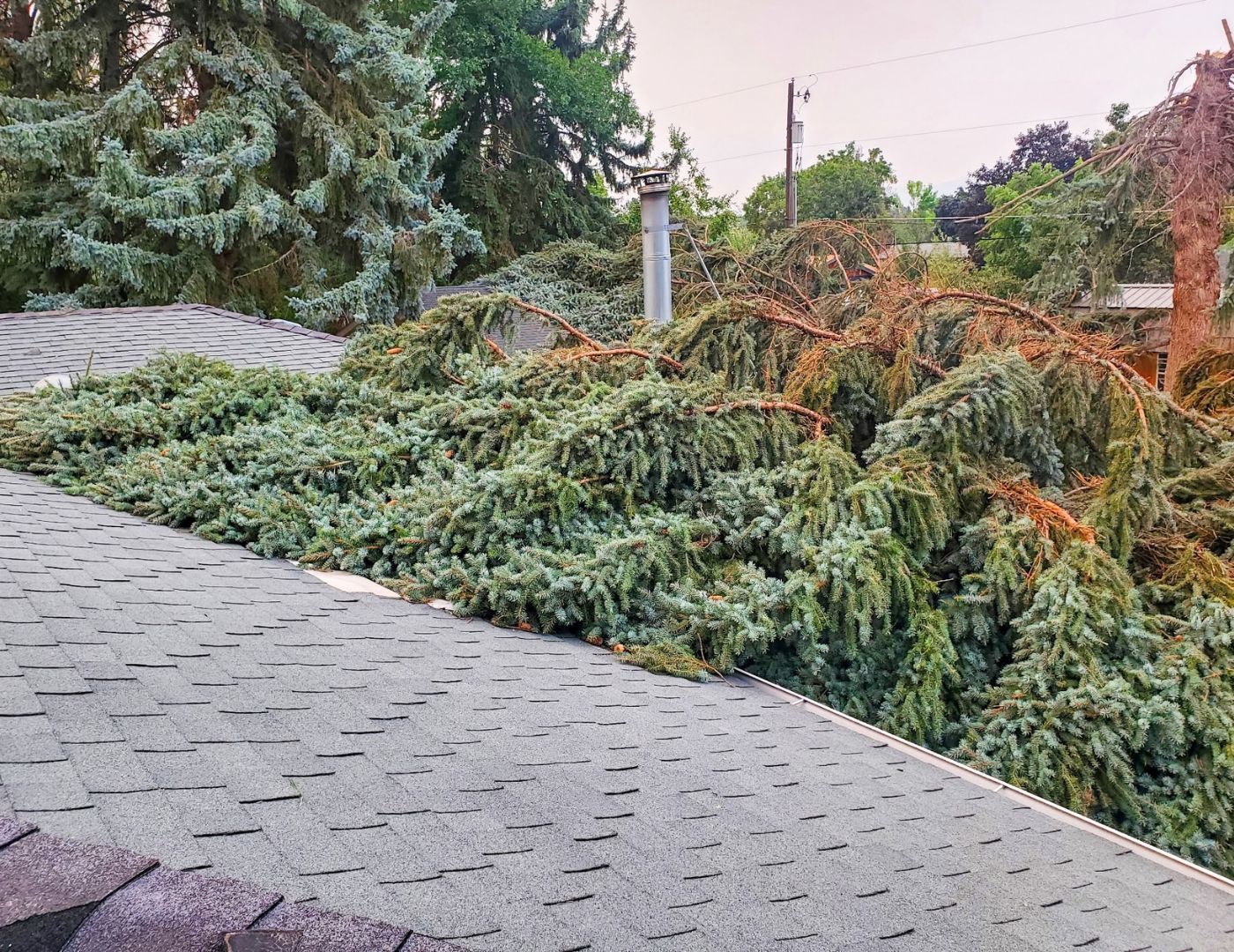
Storm Damage Roofing
Protect the home, document accessible storm-related conditions, and build the repair or replacement scope from evidence—not assumptions about what an insurance policy may cover.

Open roof or active water entry? Request emergency service first. No active leak but concerned after wind, hail, branches, snow, or ice? Schedule a storm inspection.
Start With Safety and Evidence
Storm Damage Is Not Always Obvious From the Ground
Wind, hail, falling debris, heavy snow, ice, and wind-driven rain can affect roofing, flashings, fasteners, edges, drainage, and penetrations without creating an immediate indoor leak.
Schrock Roofing evaluates accessible conditions, records the areas that changed, and explains whether the roof appears to need monitoring, maintenance, localized repair, temporary protection, or broader replacement planning. If water is actively entering, say that when you call so the request can be routed around the immediate exposure.
What Changed After the Storm?
Use the Event and the Evidence to Start the Assessment
Protect people and the interior first
Move belongings, contain water only when it is safe, keep people away from sagging ceilings, and avoid wet electrical areas. Do not climb onto a wet, snowy, icy, or wind-exposed roof. Emergency stabilization may be separate from the permanent repair.
Wind can disturb more than missing material
Lifted shingles, broken seal strips, displaced metal, loosened fasteners, edge damage, flashing movement, and wind-driven debris can affect nearby areas even when the roof still looks mostly intact.
Impact must be separated from age and wear
Hail size, hardness, direction, roof material, roof age, and collateral marks all matter. A qualified assessment documents visible conditions; it does not make the insurer's coverage decision.
Branches can create localized or structural concerns
Punctures, cracked roofing, bent panels, damaged decking, displaced flashings, gutter damage, and unsafe hanging material may require temporary protection before the full repair scope is known.
Snow and ice change both loading and drainage
Heavy accumulation, sliding snow, ice dams, blocked drainage, freeze-thaw movement, and heat loss can contribute to leaks or damaged details. Safe access and weather may control when the roof can be fully assessed.
Absence of a leak does not prove absence of damage
Some storm effects remain exterior or develop into leaks later. Note the storm date, take safe ground-level photos, and arrange an assessment when nearby properties were affected or the roof appears different.
Accessible Conditions and Connected Details
What Schrock Reviews After a Storm
Roof Surface
Missing, lifted, cracked, punctured, dented, displaced, scuffed, loose, or wind-disturbed roofing.
Edges and Flashings
Eaves, rakes, valleys, walls, chimneys, skylights, vents, boots, caps, and other vulnerable transitions.
Drainage and Snow Paths
Gutters, downspouts, low areas, ice buildup, snow movement, debris, and places where water can back up.
Interior Evidence
Accessible attic or interior stains, moisture, insulation, decking, framing, and leak paths when included in the visit.
Contractor Scope Versus Carrier Decision
Good Documentation Supports the Decision Without Promising the Outcome
What Schrock Documents
Accessible roof conditions, affected components, relevant photos, recommended work, known limitations, and the basis for the proposed repair or replacement scope.
What the Insurer Decides
Coverage, causation under the policy, depreciation, deductibles, exclusions, payment, and whether requested work is approved. Those decisions belong to the carrier.
What the Homeowner Controls
Prompt reporting, protecting the property, preserving photos and documents, reviewing the policy, choosing a contractor, and approving the actual construction agreement.
Repair or Replacement?
The Correct Scope Depends on Extent, Compatibility, and Remaining Roof Condition
Localized Repair May Make Sense
Repair is more reasonable when storm effects are limited, surrounding roofing remains serviceable, compatible materials are available, and the work can be integrated without creating a weak transition.
- One contained impact or lifted area
- Serviceable roofing around the damage
- Repairable flashing, edge, or penetration
- No broad pattern of storm-related failure
Broader Replacement May Be Smarter
Replacement becomes more likely when damage crosses multiple slopes, material cannot accept a dependable repair, decking or assembly problems are widespread, or continued spot work creates poor value.
- Damage across several roof areas
- Brittle, discontinued, or incompatible material
- Widespread seam, fastener, or impact pattern
- Major deck, moisture, or assembly concerns
Before the Appointment
Preserve the Facts Without Creating More Damage
- Record the storm date, approximate time, and weather conditions
- Photograph visible exterior and interior changes from a safe location
- Save damaged materials only when they can be handled safely
- Keep receipts for reasonable temporary protection or cleanup
- Avoid permanent work before conditions are documented unless safety requires it
- Do not sign contracts promising claim approval or waiving your deductible
Provide Schrock with the locations of leaks, fallen debris, displaced materials, previous repairs, and any carrier documents already received. That helps separate urgent stabilization from the permanent roofing decision.
From First Call to Defined Scope
The Storm Damage Assessment Process
Route
Separate active exposure from a non-emergency post-storm assessment.
Record
Review the event, visible changes, leak timing, photos, and prior roof history.
Inspect
Evaluate safely accessible roofing, details, drainage, and connected evidence.
Document
Photograph relevant conditions and identify visible limits or access constraints.
Define
Explain stabilization, repair, replacement, monitoring, or further testing needs.
Coordinate
Build the construction scope while keeping coverage decisions with the insurer.
Direct Answers
Residential Storm Damage FAQs
What should I do if water is entering now?
Move belongings, contain water only when safe, keep people away from sagging ceilings, and avoid wet electrical areas. Do not climb onto the roof. Tell Schrock that water is actively entering so the request can be routed for possible temporary protection and assessment.
Does storm damage always cause an immediate leak?
No. Wind can disturb seals, fasteners, edges, panels, and flashings without producing water entry during the same storm. Hail or debris impact can also affect the roof before an interior symptom appears.
Can Schrock tell me whether insurance will pay?
No contractor can promise coverage or payment. Schrock can document visible conditions, explain the roofing scope, and provide construction information. Your insurer interprets the policy and makes the coverage, causation, deductible, depreciation, and payment decisions.
Should I file a claim before the roof is inspected?
That decision depends on the event, visible conditions, urgency, policy, deductible, and carrier requirements. You may want to document the property, review your policy, contact the insurer with policy questions, and arrange a qualified roof assessment. Avoid anyone guaranteeing approval.
Can isolated storm damage be repaired?
Yes, when the affected area is limited and the surrounding roof remains serviceable enough to accept a compatible repair. Material age, brittleness, availability, matching, deck condition, and the extent of disturbance all affect repairability.
Will replacement roofing match the existing material?
An exact visual match is not always possible because of weathering, discontinued colors, production changes, and material availability. Schrock should explain functional compatibility and the expected appearance before work is approved.
Can the roof be assessed with snow or ice on it?
Only accessible and safely visible conditions can be evaluated. Snow, ice, wind, temperature, steep slopes, and limited daylight may require temporary stabilization, ground-level documentation, or a return visit when the surface is safely accessible.
What areas does Schrock serve for residential storm damage?
Schrock's primary residential service is centered on Missoula, Victor, and the Bitterroot Valley. Nearby Western Montana requests are reviewed based on location, access, roof condition, urgency, weather, material needs, and scheduling.
Missoula & Victor, Montana
Document What Changed and Define the Right Roofing Scope
Tell Schrock what happened, what you can see, and whether water is actively entering. The next step will be based on safety, accessible evidence, the roof system, and the extent of the damage.
Request a Storm Damage Assessment