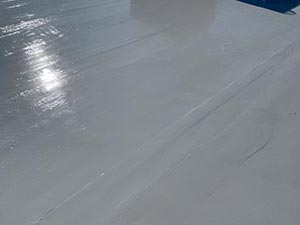
Commercial EPDM roofs in Butte face years of intense UV exposure, freezing winters, and repeated freeze-thaw cycles. As these roofing systems age, the membrane gradually loses flexibility, develops surface wear, and becomes more vulnerable to leaks if deterioration is left unaddressed. Rubber roof coating helps restore the protective surface of aging EPDM roofing systems, extending their service life when the roof remains structurally sound.
Call Schrock Roofing at (406) 961-2990 for trusted rubber roof coating in Butte, MT.
Benefits of Rubber Roof Coating
A commercial EPDM roof represents a significant investment. Applying a rubber roof coating at the right time can help maximize its service life while delaying the need for replacement.
Restores UV-Damaged EPDM Membranes
EPDM, or ethylene propylene diene monomer, is a synthetic rubber membrane widely used on commercial flat roofs. After years of exposure to Butte’s high-elevation sunlight, the membrane often develops surface oxidation, sometimes called chalking. This weathered layer gradually reduces the membrane’s ability to withstand continued weather exposure.
A rubber roof coating renews that protective surface by covering the oxidized membrane with a flexible barrier that shields it from additional UV exposure. Instead of allowing deterioration to continue, the coating slows the aging process and helps preserve the condition of the existing roof.
Helps Address Cracking and Brittleness

Cold temperatures and seasonal expansion and contraction gradually reduce the flexibility of older EPDM roofs. Small surface cracks may begin forming, and areas that once stretched with temperature changes can become brittle.
Applying a rubber roof coating adds a flexible protective layer to the roof surface while allowing the system to accommodate normal thermal movement. This approach helps protect aging membranes before minor wear develops into more significant damage.
Protects Shrinking Edges and Flashing Areas
One of the most common aging issues on EPDM roofs is shrinkage around perimeter edges, flashing details, and roof penetrations. As the membrane slowly contracts over time, stress develops around these transition points, increasing the likelihood of water intrusion.
Before any coating is installed, damaged seams, open laps, or flashing failures must be repaired. A rubber roof coating is designed to protect repaired surfaces and reduce future weathering, but it cannot replace structural roofing repairs. Once the roof is properly prepared, the coating adds another layer of long-term protection against moisture and UV exposure.
Knowing When Coating Is the Better Solution
Not every aging roof requires replacement. Many EPDM systems remain good candidates for restoration if the insulation, roof deck, and membrane attachment remain in sound condition. Surface oxidation, weathering, and minor cracking often respond well to a properly installed coating system.
However, roofs with widespread seam separation, saturated insulation, or structural deterioration usually require more extensive repairs before restoration can be considered. A professional inspection helps determine whether coating will effectively extend the roof’s service life or whether replacement offers the better long-term value.
Expert Rubber Roof Coating in Butte
Aging does not automatically mean a commercial roof has reached the end of its useful life. Addressing UV damage, surface wear, and early deterioration with a rubber roof coating can extend the roof’s service life while improving protection against future weathering.
For professional rubber roof coating in Butte, MT, contact Schrock Roofing at (406) 961-2990 today.
FAQ
Can a rubber roof coating stop an active leak on an EPDM roof?
A coating should not be applied over an active leak without first repairing the source of water intrusion. Open seams, damaged flashing, and other leak points must be corrected before coating. Once repairs are complete, the coating protects the restored surface from additional weather-related deterioration.
How do I know if my rubber roof needs a coating or a full replacement?
Roofs with surface oxidation, minor cracking, and normal weathering are often good candidates for coating if the underlying roof remains structurally sound. If the roof has extensive seam failure, widespread moisture beneath the membrane, or significant structural damage, replacement may be the better solution.
What problems does a rubber roof coating fix that repairs alone cannot address?
Individual repairs correct isolated defects, but they do not restore protection across the entire roof surface. A rubber roof coating creates a new protective layer over the membrane, improving UV resistance, flexibility, and overall weather protection while helping slow future deterioration.