Commercial buildings in Butte, Montana operate in a high-elevation climate where long winters, sharp temperature swings, and strong UV exposure can place steady pressure on roofing systems. Property owners in the region often prioritize materials that can deliver predictable long-term performance without frequent disruption or costly upkeep. EPDM roofing is a synthetic rubber membrane system widely used on commercial flat and low-slope roofs for its durability and long service life.
Call Schrock Roofing at (406) 961-2990 for EPDM roofing in Butte, MT.
EPDM Roofing and Long-Term Cost Value
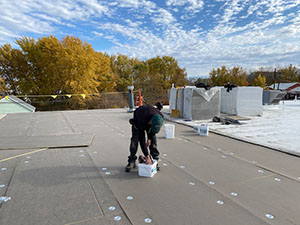
For many building owners in Butte, the first consideration in a roofing system is total lifecycle cost rather than just installation price. EPDM roofing typically sits in a favorable position in that comparison because it balances moderate installation costs with long service life and relatively low maintenance demands.
EPDM is a rubber-based membrane, most commonly black, and sometimes white in reflective applications. It is installed in large sheets that are bonded or mechanically attached to the roof surface. Because the system has fewer seams compared to some alternatives, there are fewer weak points that require ongoing attention. This design helps reduce the frequency of repairs over time, which plays a direct role in lowering long-term ownership costs.
When evaluating return on investment, property managers often consider how often a roof will need intervention. EPDM roofing tends to require fewer service calls for routine wear when compared with more rigid systems, which can reduce maintenance budgeting pressure over the life of the building.
EPDM Roofing Performance in High-Altitude Climate

Butte sits at over 5,500 feet in elevation, which means roofing systems are exposed to stronger UV radiation and more extreme temperature variation than many lower-altitude regions. Summers can be hot and sunny, while winters bring freezing conditions and repeated freeze-thaw cycles that stress roofing materials.
EPDM performs well under these conditions because the membrane remains flexible in cold temperatures. Flexibility allows the material to expand and contract as the building moves with temperature changes. This reduces the risk of cracking or splitting that can occur in more rigid roofing materials.
UV resistance also plays a role in long-term performance. High-altitude sunlight can accelerate wear on roofing surfaces, but EPDM is designed to resist ultraviolet breakdown. Over time, this helps the membrane maintain its protective qualities without requiring frequent surface treatment or replacement.
For building owners focused on predictable long-term performance, this combination of flexibility and UV stability supports a more stable cost profile over time.
EPDM Roof Maintenance and Lifecycle Costs
Maintenance is one of the most important factors affecting the overall cost of a commercial roofing system. EPDM roofing is generally considered low maintenance because the membrane is resistant to many common issues that affect flat roofs.
Routine maintenance typically focuses on keeping drainage paths clear and inspecting seams, flashing, and penetrations for early signs of wear. Because EPDM systems have fewer seams than many layered roofing materials, there are fewer areas where leaks typically begin. This can reduce both inspection complexity and long-term repair frequency.
When minor issues do occur, EPDM is often repairable without large-scale replacement work. Sections can be patched or sealed, which helps extend the service life of the roof and delay major capital replacement costs. For property managers in Butte, this repairability is an important factor in long-term budgeting.
Over time, reduced maintenance needs and repair flexibility combine to improve overall return on investment, especially in climates where seasonal stress on roofing systems is unavoidable.
EPDM Roofing Installation and Long-Term ROI Factors
Installation quality plays a direct role in how well an EPDM system performs over its lifespan. Proper surface preparation, secure adhesion or fastening, and correctly sealed transitions all contribute to long-term performance. On commercial buildings in Butte, attention to edge details and drainage design is especially important due to snow accumulation and seasonal melt cycles.
Once installed correctly, EPDM systems can perform for decades under Montana’s environmental conditions. The membrane’s ability to handle movement, resist UV damage, and remain stable through temperature extremes supports its reputation as a cost-effective long-term roofing option.
For property owners comparing roofing systems, EPDM often stands out not because of the lowest upfront cost alone, but because of how it manages total ownership cost across installation, maintenance, and repair cycles.
EPDM Roofing for Long-Term Commercial Value
EPDM roofing offers a practical balance of durability, flexibility, and manageable long-term costs for commercial buildings in Butte. In a climate defined by elevation-driven UV exposure and wide temperature swings, the system’s ability to remain stable while minimizing maintenance needs makes it a strong option for long-term planning.
For EPDM roofing in Butte, MT contact Schrock Roofing at (406) 961-2990 today.
FAQ
How much does EPDM roofing cost compared to other commercial roofing systems?
EPDM roofing is generally positioned in the mid-range for installation cost. While pricing depends on roof size and condition, its long service life and lower maintenance needs often improve overall lifetime value compared to some higher-maintenance systems.
How long does an EPDM roof last on a commercial building in Montana’s climate?
In Montana’s climate, a properly installed and maintained EPDM roof can often last 25 to 40 years. Lifespan depends on installation quality, drainage conditions, and routine maintenance practices.
Does EPDM roofing require a lot of maintenance over its service life?
EPDM roofing is considered low maintenance. Most upkeep involves periodic inspections and basic drainage management, with repairs typically limited to localized areas when needed.